
|
Introduction to Microcontroller Programming * Course Index * Introduction * About the Author * About this Course * Feedback * Course Navigation * Quick Course Navigation * How to use this Course * Acronyms Used and Course Conventions About PICmicro Chips * What is a PICmicro? * Microcontrollers * Digital versus Analogue * Inputs and Outputs * Memory * Programming * 16F1937 Architecture Clocking Your PICmicro Devices * Introduction * The Clock Circuit * Clock Settings * Clock Confusion E-Blocks * Introduction to E-blocks * Using E-blocks * E-blocks Boards Flowcode Step By Step * Introduction to Flowcode * Basic Flowcode Functions * Digital Outputs * Digital Inputs * Basic Loops * The LCD Display * Binary Numbers * Decisions * Goto (Connection Point) * 7-Segment Displays * Software Macro * Strings and Memory * A Simple Hi-Fi PICmicro Projects * Introduction to PICmicro Projects * Construction Methods * Choosing a Power Source * Adding Inputs ## Switches ## Switch Unit ## Sensors ## Sensing Units * Input Conditioning * Adding Outputs * Adding Drivers Labs * Introduction and Lesson Plan * 1. Output * 2. Delay * 3. Connection Point * 4. Calculations * 5. Loop * 6. Input * 7. Decision * 8. LCD * 9. Keypad * 10. Analogue + EEPROM * 11. Software Macro * 12. External Interrupt * 13. Timer Interrupt |
(:Summary:Contains the 'action' links (like Browse, Edit, History, etc.), placed at the top of the page, see site page actions:) (:comment This page can be somewhat complex to figure out the first time you see it. Its contents are documented at PmWiki.SitePageActions if you need help. :) * Print (:comment (:if group Site,SiteAdmin,Cookbook,Profiles,PmWiki*:) (:comment delete if and ifend to enable backlinks:) * %item rel=nofollow class=backlinks accesskey='$[ak_backlinks]'% [[{*$Name}?action=search&q=link={*$FullName} | $[Backlinks] ]] (:ifend:) :) * Login Switches<^< Adding Inputs | Course Index | Switch Unit >^>(:nl:) One of the most useful input devices! You can use a switch: * to start a sequence of events, such as a lighting display * to start, and later stop, a stopwatch program * to input pulses for a control system to count - the number of laps completed by a runner for example * to act as a sensor to trigger an alarm when a door is opened. Switches are manufactured in a number of different forms. Here are some: Momentary acting (push switch)For example, the switch on a doorbell, which causes something to happen only while it is being pressed. 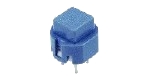 Toggle switchFor example, a light switch, which switches on (and stays on) the first time it is pressed, and switches off the next time. 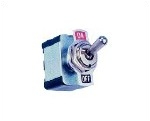 Tilt switchThis switches on when the body of the switch is tilted to a certain angle, or beyond. 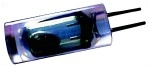 Rotary switchFor example, the selector switch on a hi-fi system, which you use to switch between the tape-deck, the CD deck and the radio tuner. To operate it, you turn a knob attached to the spindle of the switch. 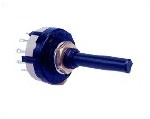 Key switchFor example, the switch used in a car ignition circuit, which operates only when the correct key is inserted. 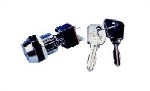 Magnetic switchThis switches on when a magnet is placed next to the switch, and off when the magnet is moved away again. 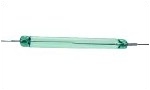 (:nl:)(:table style="clear:both":)
| |
(:Summary: Website page footer:)
Print - (:comment (:if group Site,SiteAdmin,Cookbook,Profiles,PmWiki*:) (:comment delete if and ifend to enable backlinks:) %item rel=nofollow class=backlinks accesskey='$[ak_backlinks]'% [[{*$Name}?action=search&q=link={*$FullName} | $[Backlinks] ]] (:ifend:) :) Search - Login
Page last modified on August 26, 2011, at 09:37 AM