|
Introduction to Microcontroller Programming * Course Index * Introduction * About the Author * About this Course * Feedback * Course Navigation * Quick Course Navigation * How to use this Course * Acronyms Used and Course Conventions About PICmicro Chips * What is a PICmicro? * Microcontrollers * Digital versus Analogue * Inputs and Outputs * Memory * Programming * 16F1937 Architecture Clocking Your PICmicro Devices * Introduction * The Clock Circuit * Clock Settings * Clock Confusion E-Blocks * Introduction to E-blocks * Using E-blocks * E-blocks Boards Flowcode Step By Step * Introduction to Flowcode * Basic Flowcode Functions * Digital Outputs * Digital Inputs * Basic Loops * The LCD Display * Binary Numbers * Decisions * Goto (Connection Point) * 7-Segment Displays * Software Macro * Strings and Memory * A Simple Hi-Fi PICmicro Projects * Introduction to PICmicro Projects * Construction Methods * Choosing a Power Source ## Choosing a Power Source ## Batteries ## Primary Batteries ## Rechargeable Batteries ## Mains Power Supply Units * Adding Inputs * Input Conditioning * Adding Outputs * Adding Drivers Labs * Introduction and Lesson Plan * 1. Output * 2. Delay * 3. Connection Point * 4. Calculations * 5. Loop * 6. Input * 7. Decision * 8. LCD * 9. Keypad * 10. Analogue + EEPROM * 11. Software Macro * 12. External Interrupt * 13. Timer Interrupt |
(:Summary:Contains the 'action' links (like Browse, Edit, History, etc.), placed at the top of the page, see site page actions:) (:comment This page can be somewhat complex to figure out the first time you see it. Its contents are documented at PmWiki.SitePageActions if you need help. :) * Print (:comment (:if group Site,SiteAdmin,Cookbook,Profiles,PmWiki*:) (:comment delete if and ifend to enable backlinks:) * %item rel=nofollow class=backlinks accesskey='$[ak_backlinks]'% [[{*$Name}?action=search&q=link={*$FullName} | $[Backlinks] ]] (:ifend:) :) * Login Choosing a Power Source<^< Choosing a Power Source | Course Index | Batteries >^>(:nl:) The first decision to make is battery power or mains power supply unit?
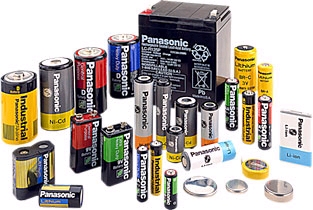
Factors to consider: # '''Supply voltage:''' ->PICmicro microcontrollers require power supply voltages between 2V and 6V, depending on which PICmicro you are using. Both batteries and mains power supply units provide suitable voltages. # '''Current demand:''' ->This depends mainly on what the output device you use in the circuit. A few LED's or a 7-segment display draw currents of less than 100mA. On the other hand, a motor or a solenoid may require a few amps to operate. Very few batteries are capable of delivering currents greater than one amp. Even then, battery life will be drastically shortened by such a current demand. Mains power supply units can provide sufficient current, though not the 'battery eliminator' type. # '''Physical size''' ->For portable equipment, size and weight could be important considerations when choosing the power source. Provided the current demand is low, batteries are probably the best choice here. # '''Cost''' ->Mains power supply units have a high initial (purchase) cost, but low running costs. Batteries are a very expensive way to buy electricity! # '''Availability of mains power''' ->A crucial question, which may leave battery power as the only option! # '''Health and safety''' ->The mains electricity supply is potentially dangerous. Depending on who is going to use the control system, and where it is going to be used, batteries may be the best option. (:nl:)(:table style="clear:both":)
| |
(:Summary: Website page footer:)
Print - (:comment (:if group Site,SiteAdmin,Cookbook,Profiles,PmWiki*:) (:comment delete if and ifend to enable backlinks:) %item rel=nofollow class=backlinks accesskey='$[ak_backlinks]'% [[{*$Name}?action=search&q=link={*$FullName} | $[Backlinks] ]] (:ifend:) :) Search - Login
Page last modified on August 26, 2011, at 08:55 AM